

Standing at the bow of the ship as it rocked back and forth against the lashing of the wind and waves, the old ferry drew us ever closer. Its motion revealed with every passing moment the true grandeur of the two volcanoes that dominated the skyline across the lake.
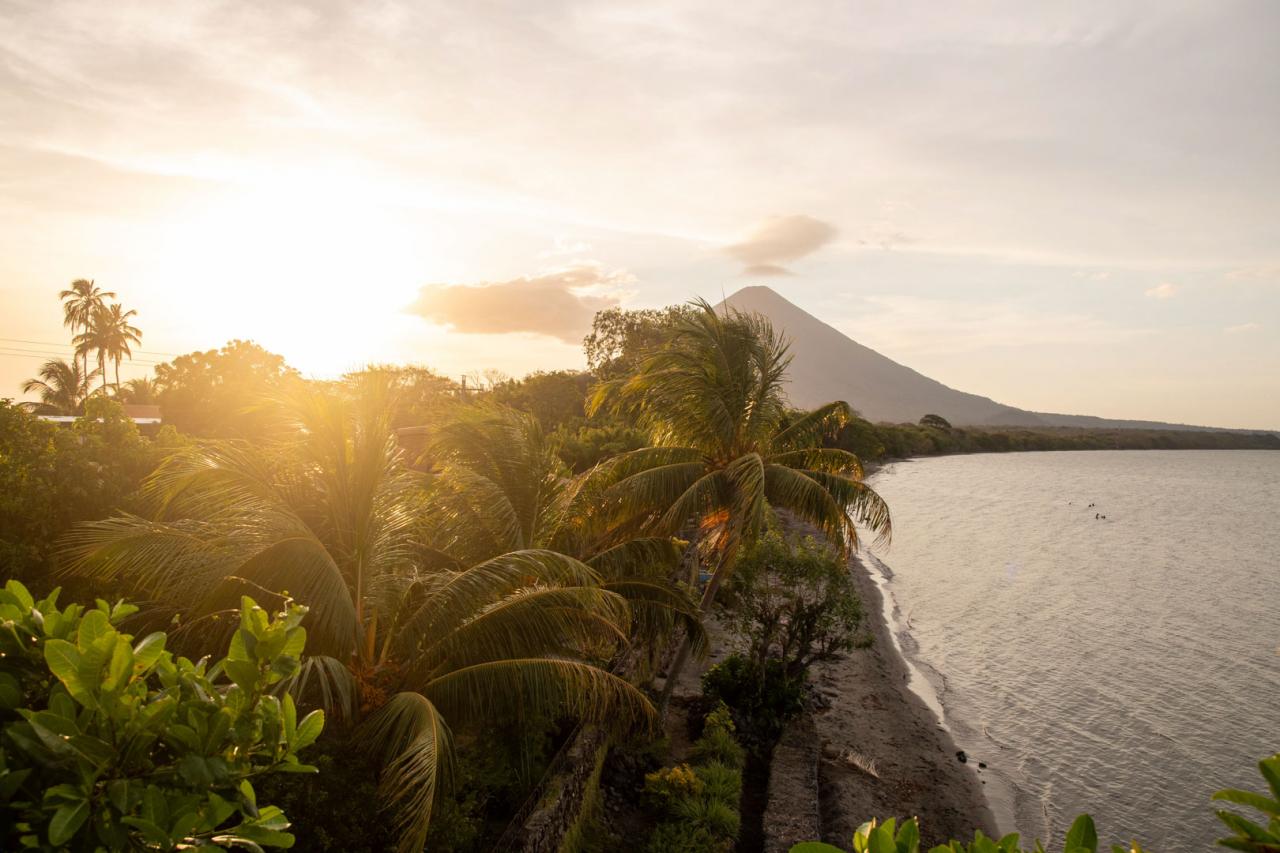
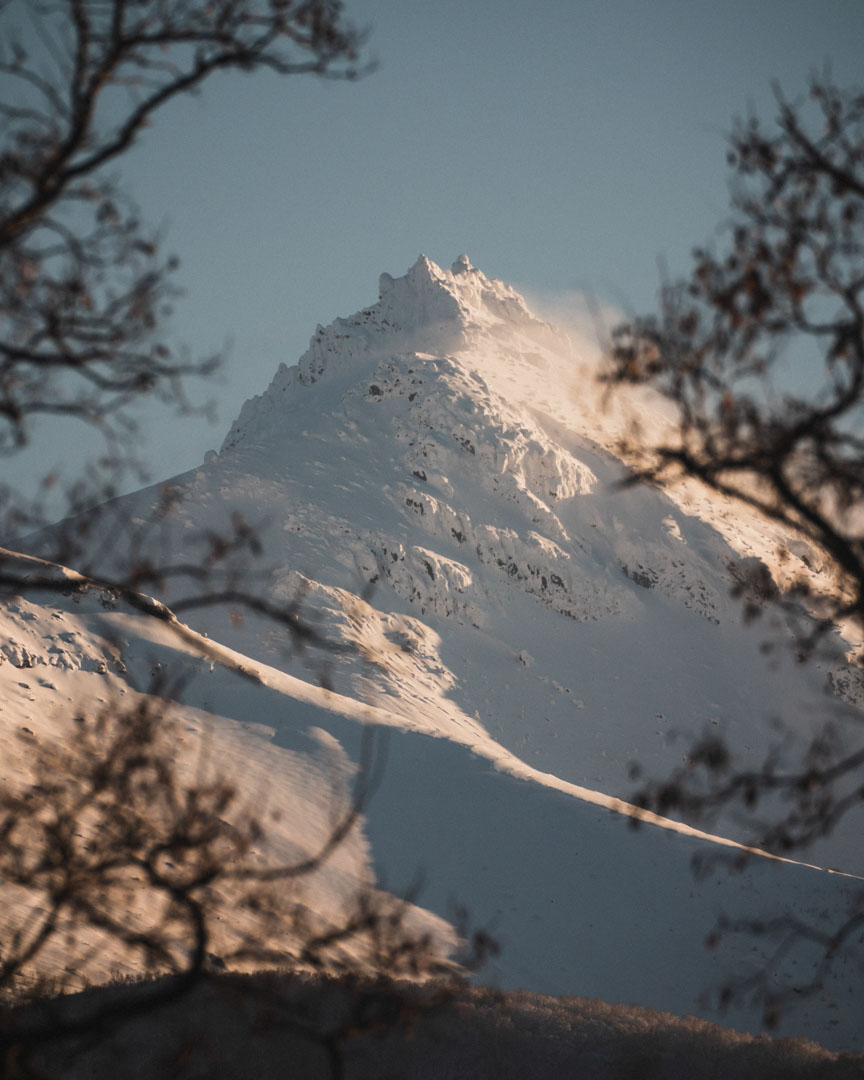
Looming ahead of us, our view was engulfed by the perfectly formed cone of Concepción and its sister volcano, Maderas. Rising dramatically out of the water, these majestic mountains, beautifully decked out in fertile green forest, showcased the high twin summits that pierced the rolling clouds against a sharp blue sky.
Spellbound by the vista that was slowly unfolding in front of me, my heart began thumping and I had a gut feeling that Isla de Ometepe was going to transport us to a new level of experience.
Having just wrapped up a three-month season in Panama, it was time for Francesca and I to decide upon our next destination. While listening to the tales of the backpackers and kitesurfing travelers who passed through Punta Chame on their Central American journey, the repeated mention of Nicaragua caught our imagination.
Despite barely noticeable on the kitesurfing map, Ometepe Island, which emerges from Lake Cocibolca (also known as the great Lake of Nicaragua, or Granada) is said to receive a prolonged wind season and is often touted as an “oasis of peace” due to its raw beauty and serene atmosphere. Drawn by its unique culture and natural attractions, Ometepe has long been popular with eco-tourists, adventure seekers and cultural enthusiasts. Excited by the prospect of discovering a novel kitesurfing gem still far beyond the clutches of mainstream tourism, we readied ourselves for travel.
The plan was simple; we would cross the Panamanian border on foot and continue north through Costa Rica by coach. Through piecing together connections, we aimed to arrive at the Peñas Blancas border crossing which is the official entry point between Costa Rica and Nicaragua.
Our journey from there would involve a 45-minute car ride to the small port town of San Jorge in Rivas, before embarking on the final 1-hour ferry trip and docking in Moyogalpa, the largest village on Ometepe Island. Not being in a hurry to arrive meant we could take our time and enjoy Costa Rica’s stunning scenery as it revealed itself to us along the way.
Arrival at the Peñas Blancas Border Post signaled our passage through the gateway separating North and South America via the Pan American Highway. It’s a chaotic, bustling scene with people and buses all moving between the two borders.
Lugging our kite gear, camera equipment and bags across the three hundred meters of No Man’s Land between the two countries was probably the hardest part of this experience. Red of face and dripping in sweat, we queued up at the immigration terminal and proceeded to finalize our entry into Nicaragua.
Shifting from one country to the other was like chalk and cheese. Costa Rica is one of the most expensive places to live in Central America, whereas Nicaragua is the second poorest country in the region, and this becomes quickly apparent. Dodging past ox-drawn carts, herds of cattle, chickens and other various livestock grazing along the road, the windy route to Rivas took us around the shore of the lake and onto the final leg of our journey.
Once on the ferry, I had to remind myself that we were not heading out to sea. What struck me was the size and scope of this impressive body of water. Lake Nicaragua is the largest lake in all Central America, with Ometepe being considered the largest volcanic island to rise in a freshwater lake.
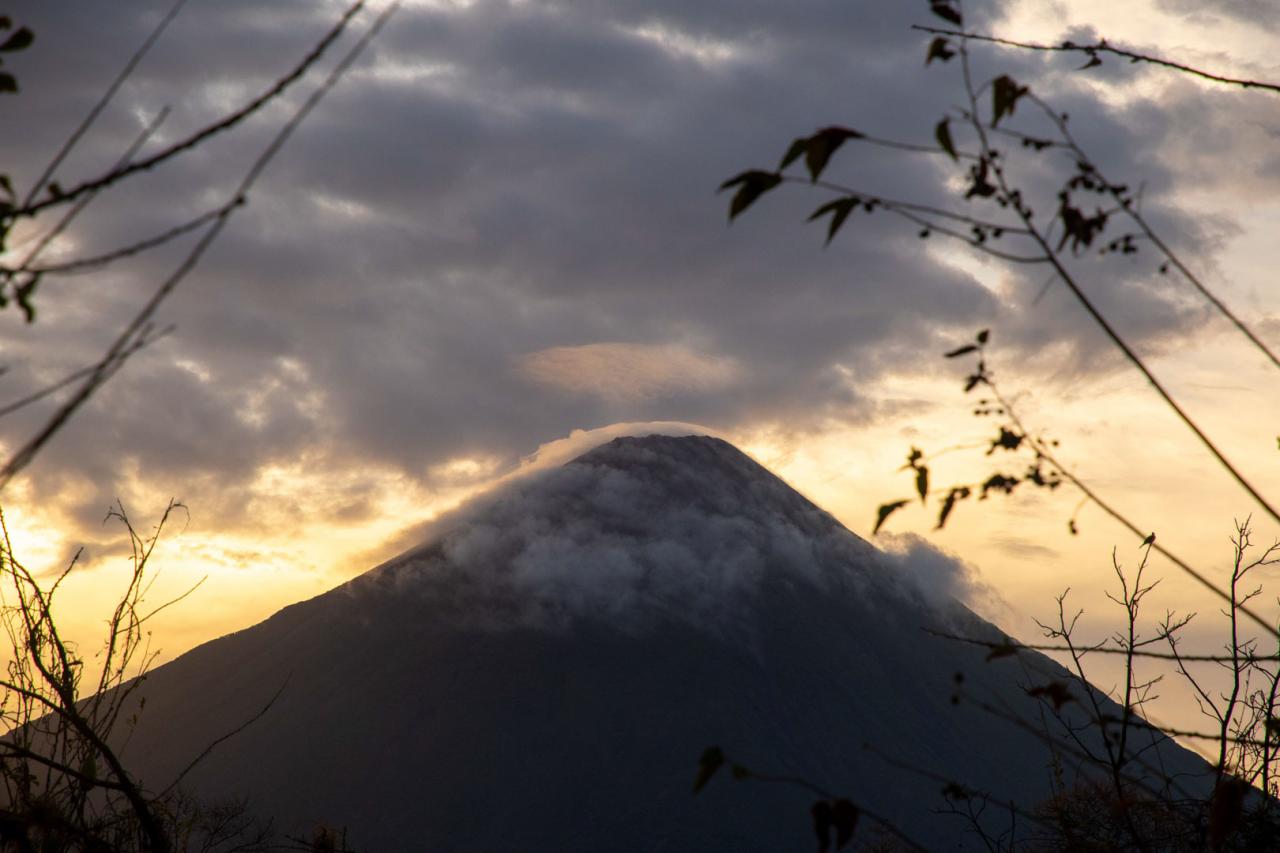
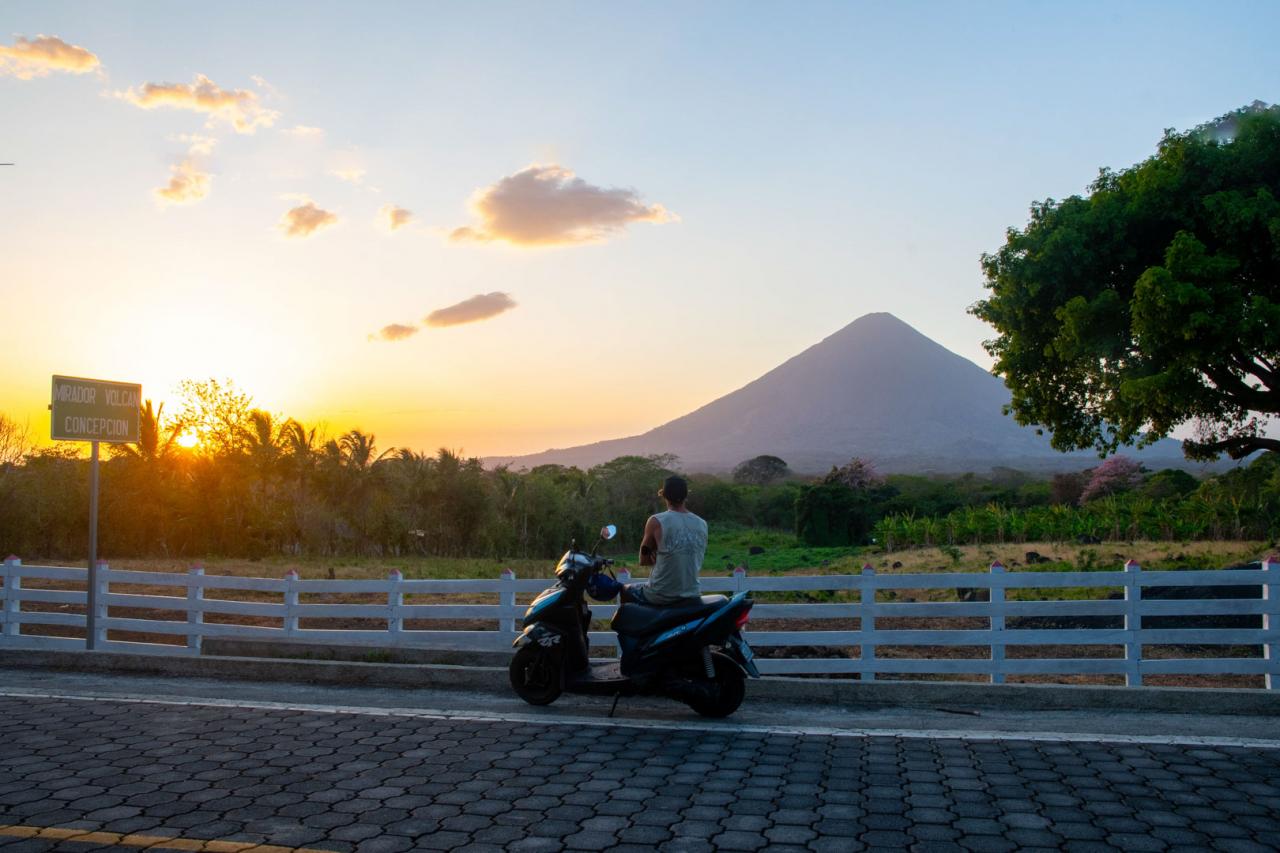
Enthralled by the sheer natural splendor of our new surroundings, we stepped off the boat and were instantaneously plunged into a lush, tropical landscape. Linked by a thin, flat isthmus, the twin volcanoes shape the island like an infinity symbol. On the northern half looms the majestic Concepción, Nicaragua’s second highest volcano. Sill active, its symmetrical cone is one of the most perfectly shaped volcanoes in the Americas. Towering over the southern side is the extinct volcano Maderas, the smaller of the two volcanoes forming the island.
Separated by a thin stretch, the lava flow from past eruptions has created a natural bridge that allows connectivity of the two volcanos by road. Sitting adjacent to this road is Playa Santa Cruz, Ometepe’s wind capital and the best kitesurfing location in Nicaragua.
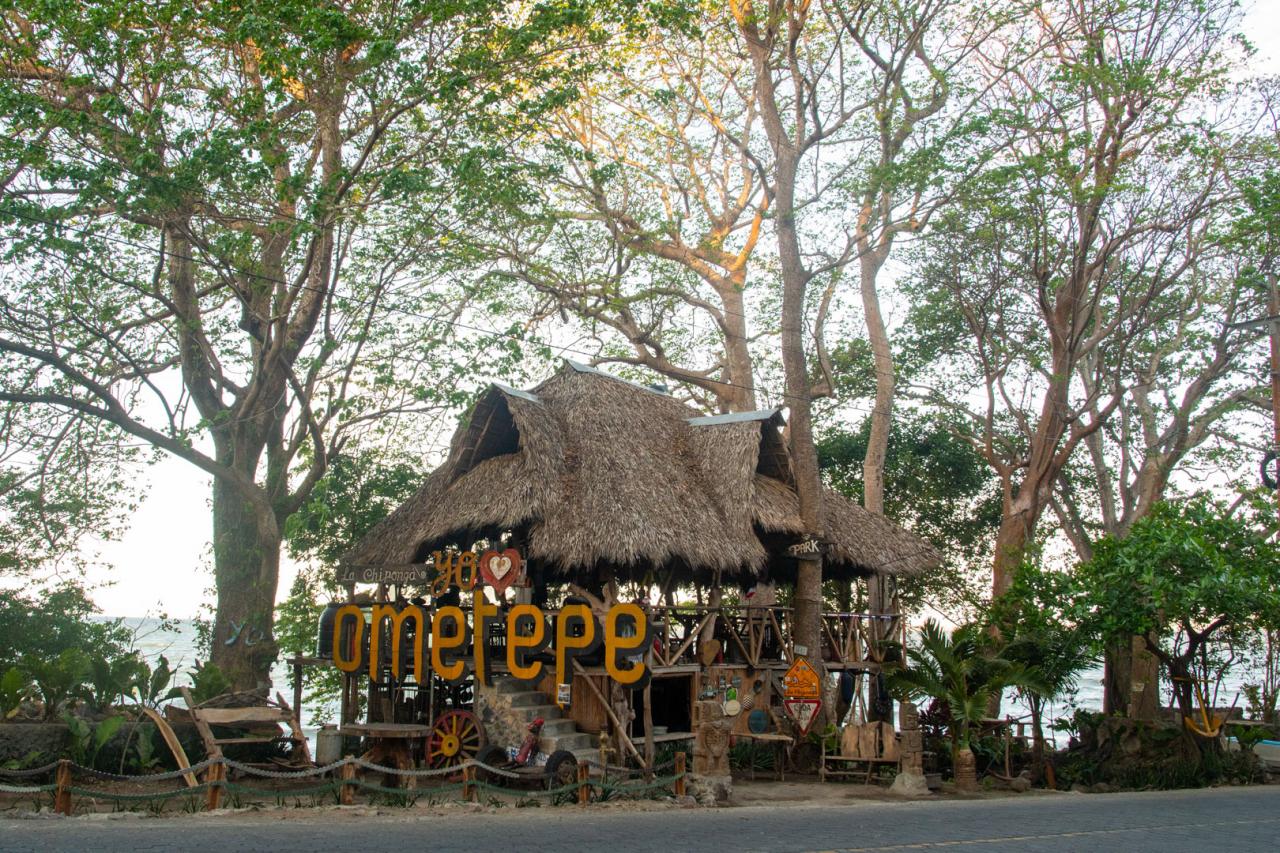
Our accommodations were a simple cottage at La Chiponga, part of a family run hostel located on Playa Santo Domingo. The lush property backed onto a natural reserve which was a veritable cornucopia of birds, monkeys, bugs, lizards, spiders, and all manner of beasts in between.
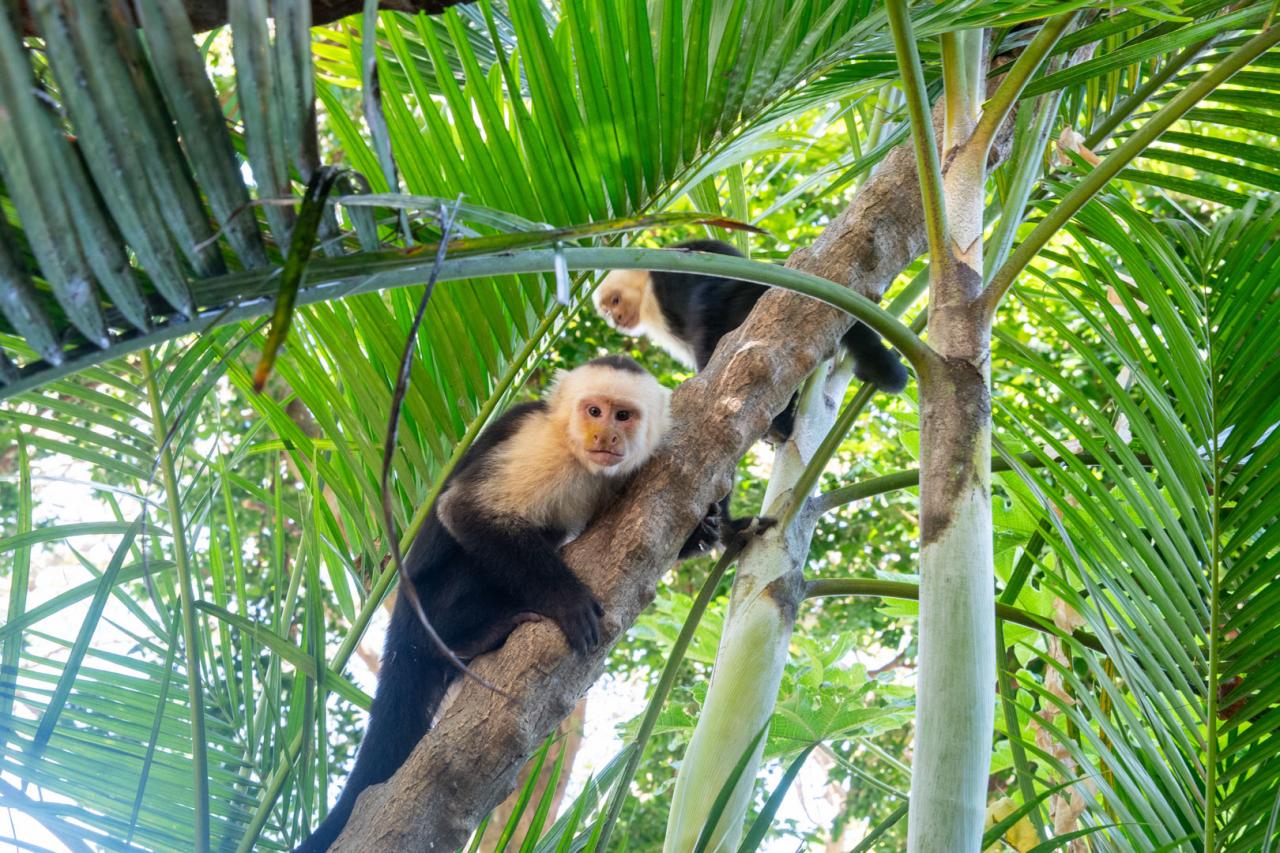
Every morning we were met by the resonant, guttural roars of howler monkeys emanating from the treetops above. The sounds of white-faced capuchin monkeys scampering across the roof, and green parrots singing in the surrounding trees were also ever-present. This jungle environment, teeming with exotic flora and fauna, was to be our home for the next month and a half. Banging out our shoes to check for scorpions, dodging tarantulas and ducking bats would become part of our daily routine.
The kite beach at Playa Santa Cruz consists of a wide-open sandy bay, stretching out for a couple of kilometers in either direction. Flanked by a large bank lined with trees, the main road passes adjacent to the bay, connecting the two volcanic land masses. On the other side of the road is the gorgeous Rio Istián, a picturesque aquatic wetland that gets fed by the lake tides and attracts a huge array of bird species, cayman alligators, iguanas and turtles.
Arriving from the east, the wind streams across the lake, picking up a few extra knots of venturi effect as it squeezes inside the bay and funnels across the thin strip of land connecting the two islands. We found it was strongest during the early mornings, sometimes dipping through the mid-day heat and then picking back up at sunset.
When we first arrived, the water levels in the bay were at an all-time high. There was no visible beach, and the tide mark was tight against the ridge of the road. Citing this anomaly as an effect of the La Niña, a climate pattern that is seen to fuel heavy rainfall and flooding, the locals went on to explain that the wet season had been a particularly fierce one, resulting in the lake tide line dramatically increasing.
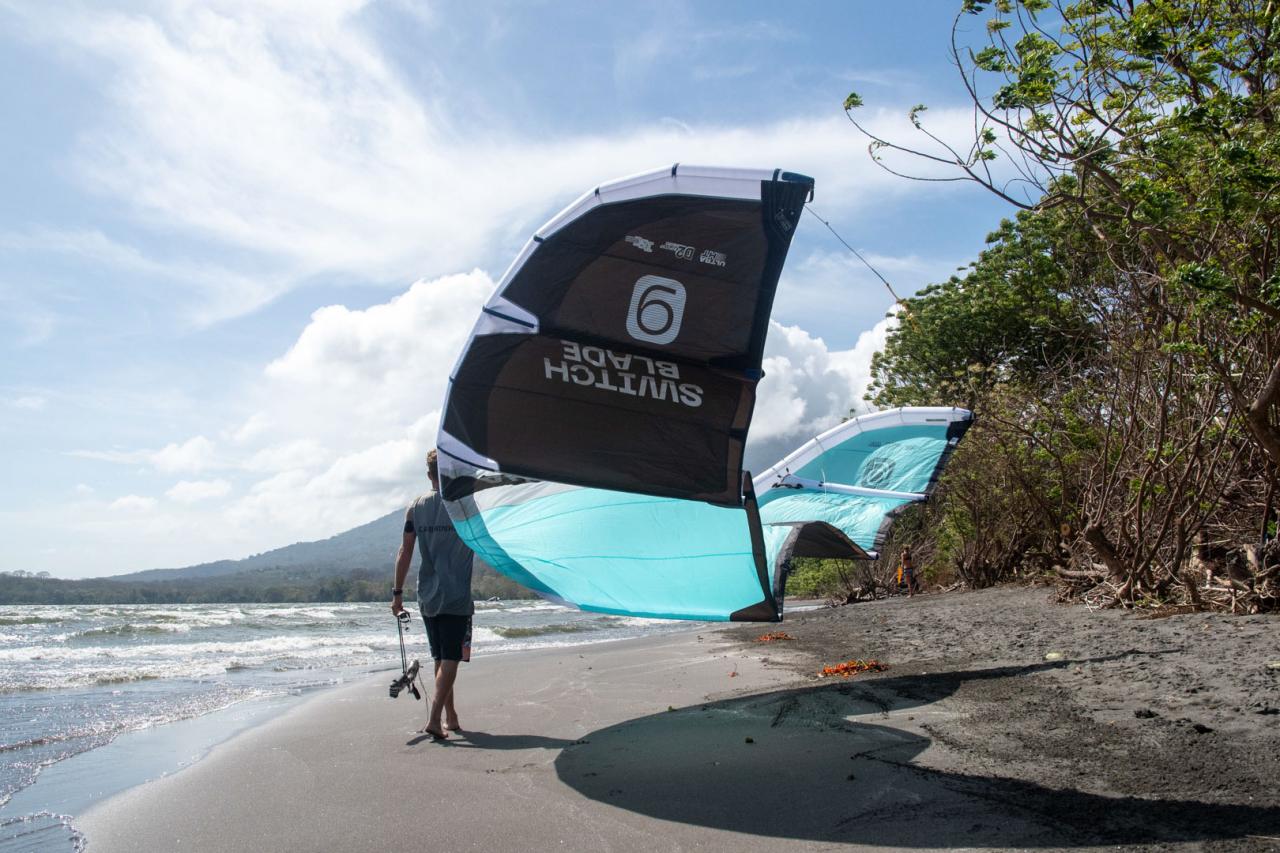
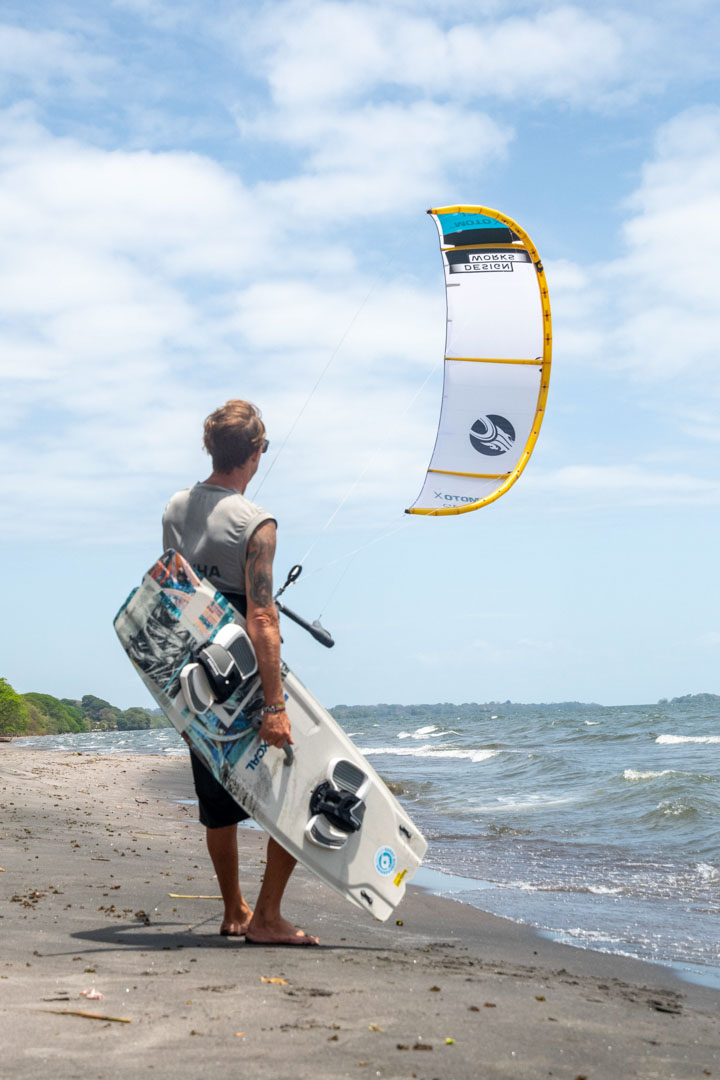
Not having the customary breadth of the beach along the bay meant it was going to be tricky to find enough space to set up, launch and land our kites. With a solution in sight, pumping up the gear was done on a patch of embankment designed as a pullout point for bikers and cars. We ran the lines straight down the road and checked they were correctly connected to the kite before restringing them back on the bar.
The final phase involved scrambling down the sandy slope and positioning Francesca with the kite at the edge of the wind window. From here on it was plain sailing, a straightforward launch involving me uncoiling my lines while walking out into the water.
Incredibly, it only took a week or so before we started to notice a dramatic shift in the lake’s tide line. The water appeared to be retreating at a rapid rate, exposing the dark underlying volcanic sand that forms the playa. Responding to our perplexity, the natives smiled and replied that the lake was alive and resonating with its own internal rhythm. Feeling relieved, we saw the beach grow daily, forming for us the space we so desperately sought.
The panorama that unfolds while you tack out on the bay between the two volcanoes is undeniably unique and feels prehistoric, like something out of a Jurassic Park movie. As you ride out towards the lake it’s hard not to be captivated by the towering mushroom shaped clouds that engulf the crater of Concepción.
Heading back in towards the bay, you are met by the sight of Maderas, its ancient cone swathed in a cloud forest masking the hidden bowl at its peak.
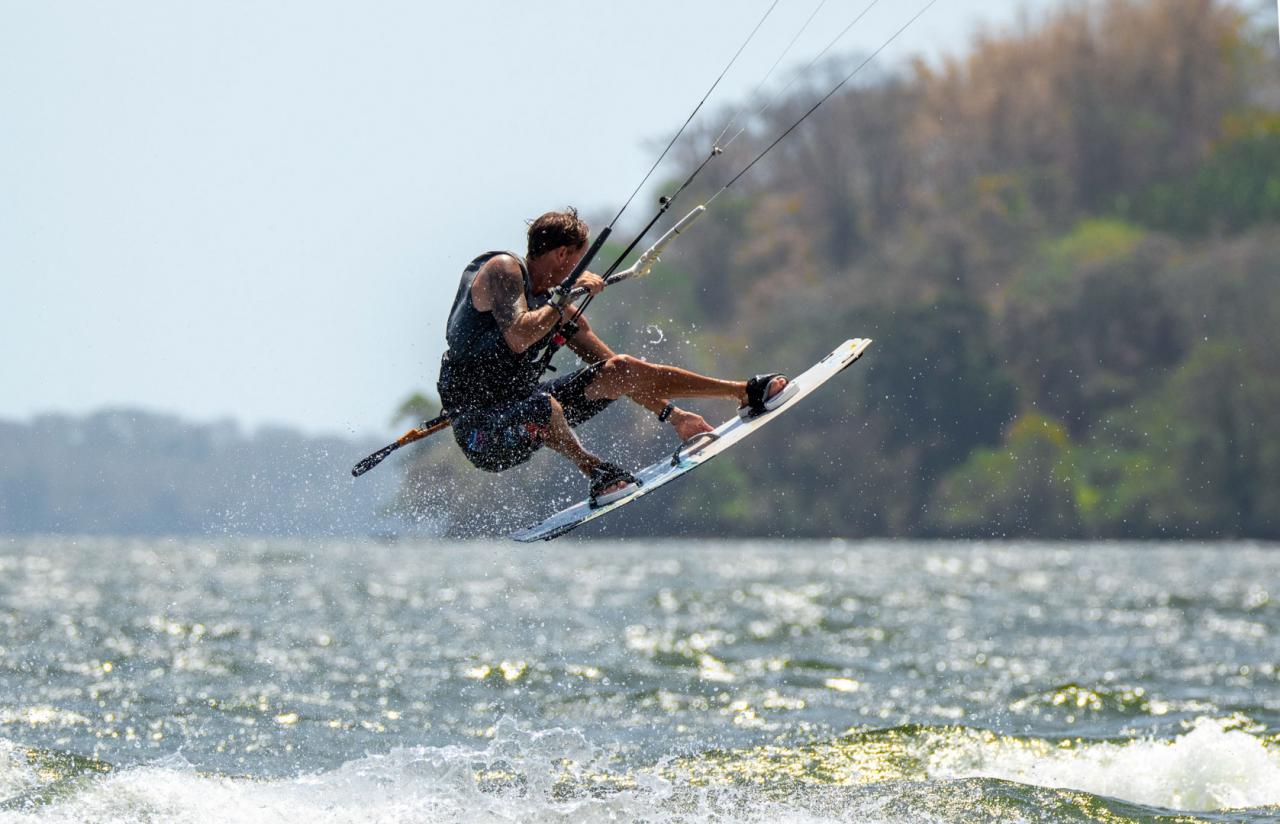
The choppy bump and jump conditions encountered on the water are produced by the rolling wind swell that blows across the expansive lake. Close to the beach, the shifting sandbars underneath the shallow water form waves and a rough shore break.
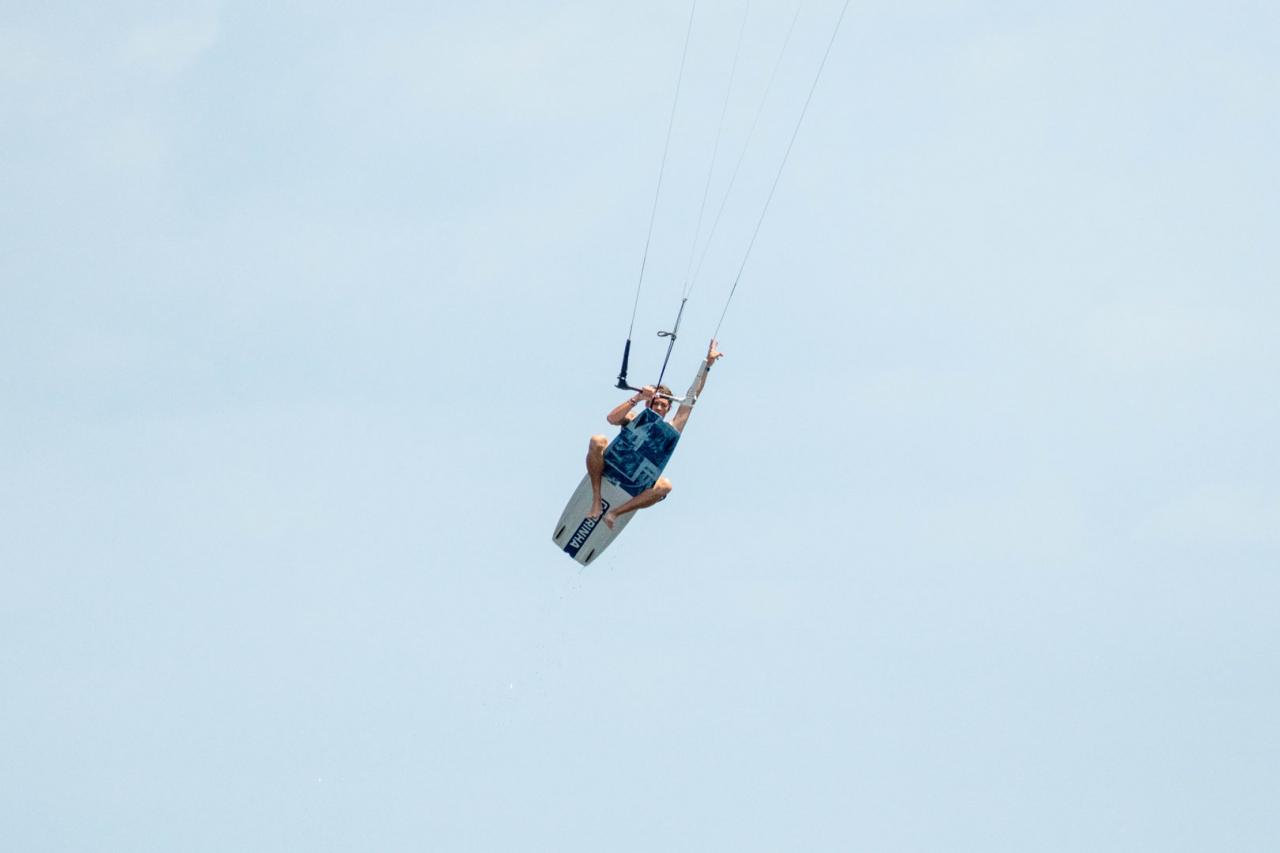
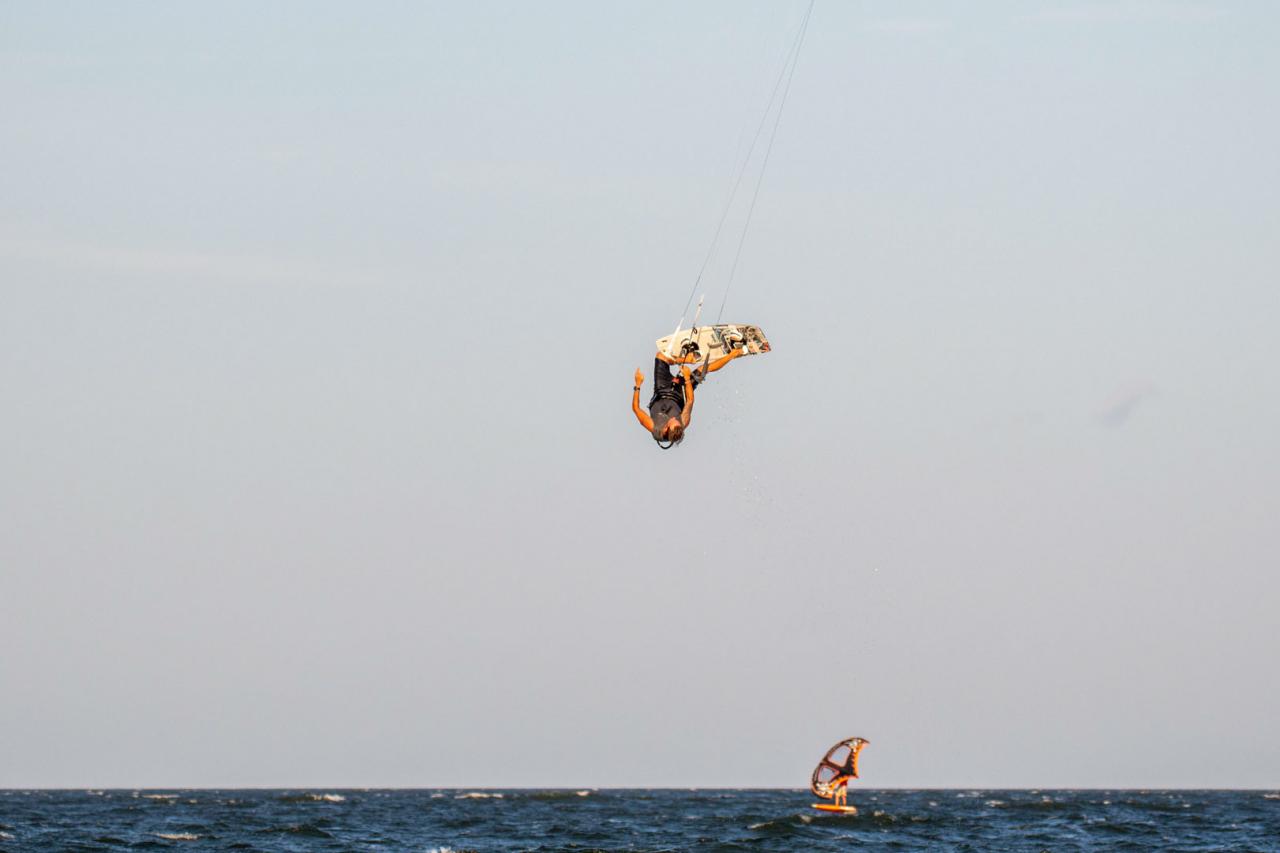
The wind is strong and steady, and for periods would blow all day and night nonstop. When this happened, the wind swell would build and intensify the size of the surf at the shoreline, forming powerful steep kickers that were perfect for practicing big air and kite loop maneuvers.
The energy of the lake made me want to grab a wing and go foiling. Knowing how much fun it can be to jump on a big bump set and prone surf between sections, my thoughts turned to downwinders using the para wing, and just how dynamic that could be here.
While the lake holds a pleasant water temperature of around 70 F (24 C) all year round, the best time to find constant wind is from November until April.
Ometepe is a treasure trove of diverse geographical marvels and is home to countless beautiful places worth visiting. Still favoring a low-key approach towards its tourism, you will not find any big restaurants or corporate chain stores here. Instead, the locally run eateries and roadside stalls paired with a shift towards permaculture projects and sustainable eco farms steer the island towards retaining its authentic “Nica” charm.
There is only one main road and hardly any traffic which makes time on the island appear to slow down. The rural village scenes portray a quaintly charming depiction of daily life in Ometepe, with farmers on horseback guiding their cows, pigs, and horses along the streets. The land itself, strewn in black volcanic boulders from previous eruptions, is incredibly fertile and features a vibrant mosaic of flourishing forests and rich ecological diversity.
We gorged ourselves at the El Pital chocolate factory, enjoyed frequent magical sunsets at Playa Mango, swam in the healing waters of the Ojo de Agua natural springs and kayaked around the Rio Istian wetland.
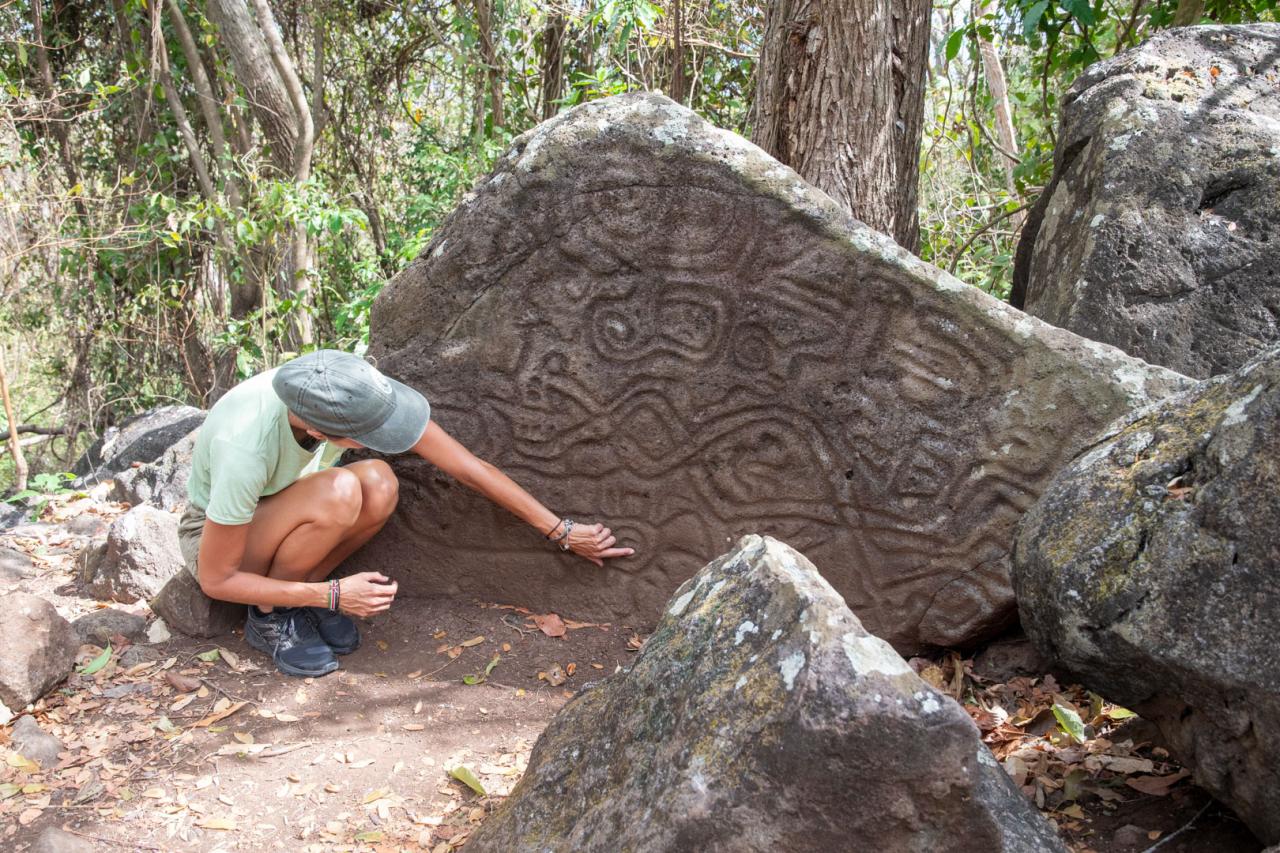
Hiking the trail at Volcan Maderas and discovering the pre-Columbian petroglyphs at Finca Magdalena proved to be one of the trip highlights. Archaeologists studying these well-preserved primordial rock carvings have dated them back to over three thousand years.
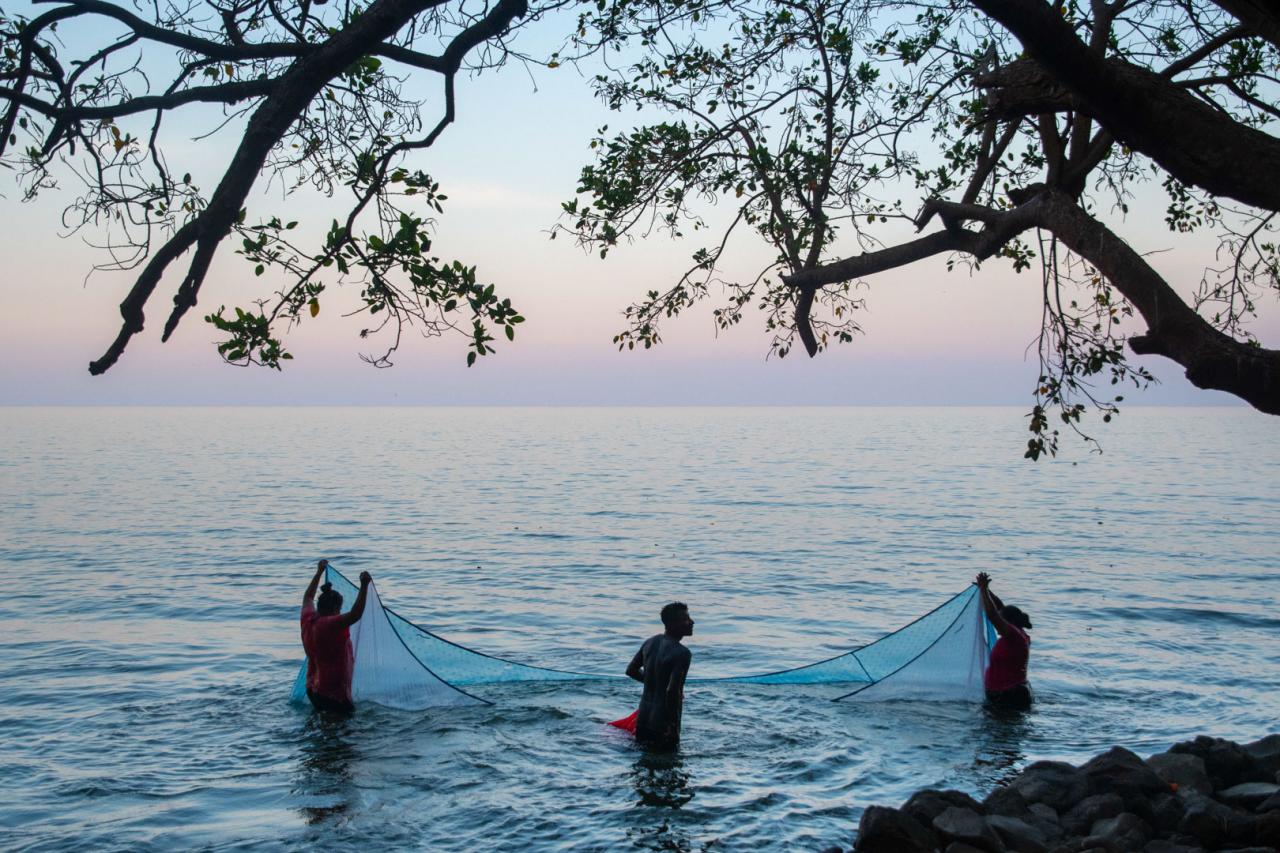
The shores of this myth-like oasis have a presence that pulls you in. Time feels trapped in an age where dinner is caught from the lake, washing laundry is performed in a river and horseback riding is a means of transport, not a pastime.
Secluded from the rest of the country by the great lake, it is true that living on Ometepe can feel far away from the rest of the world. This place, set back in time with its off-grid charm, found a way to spark our imaginations and satisfy our wandering souls.