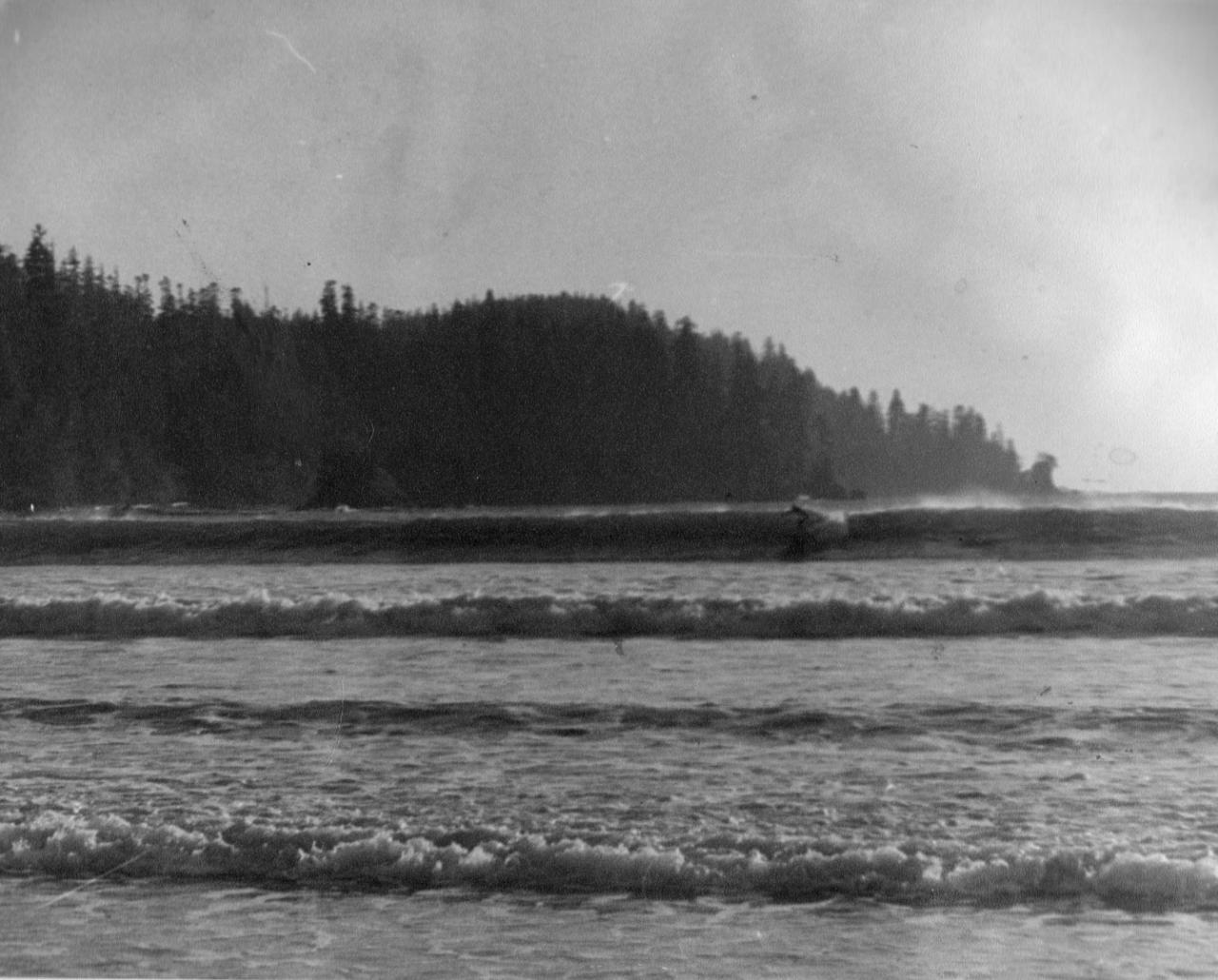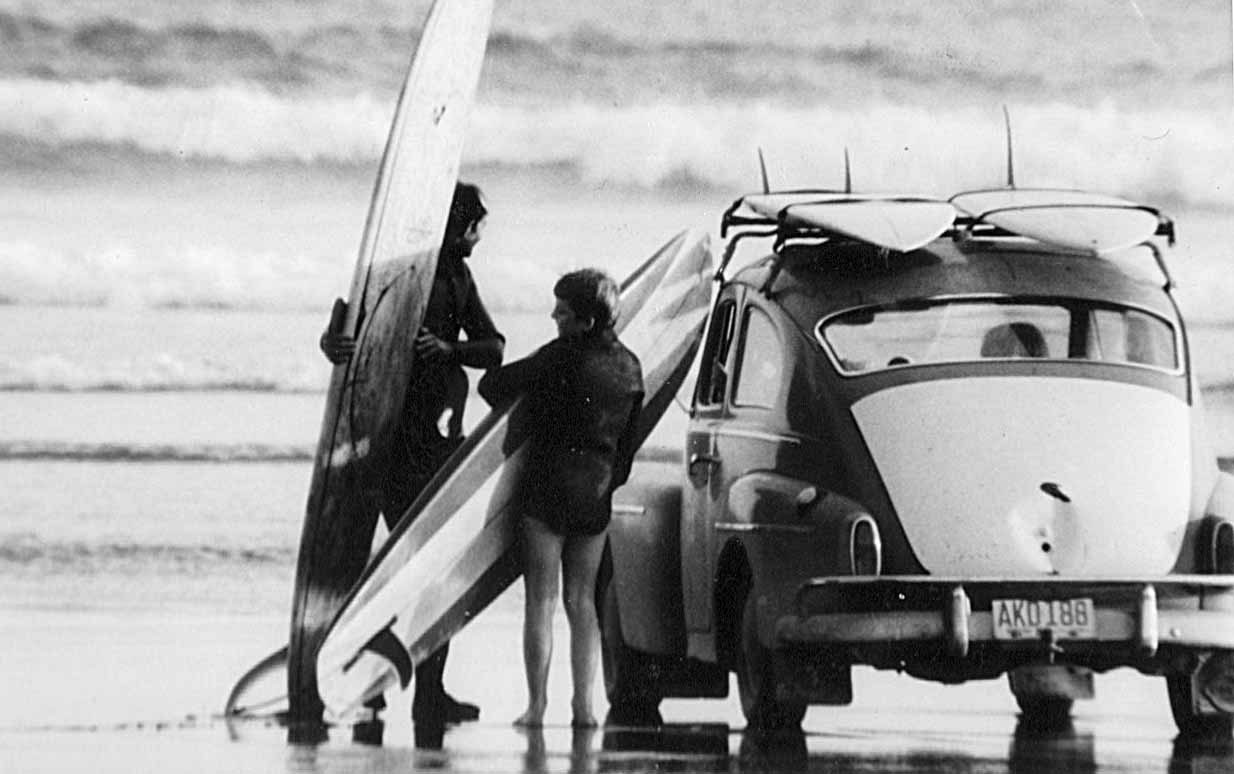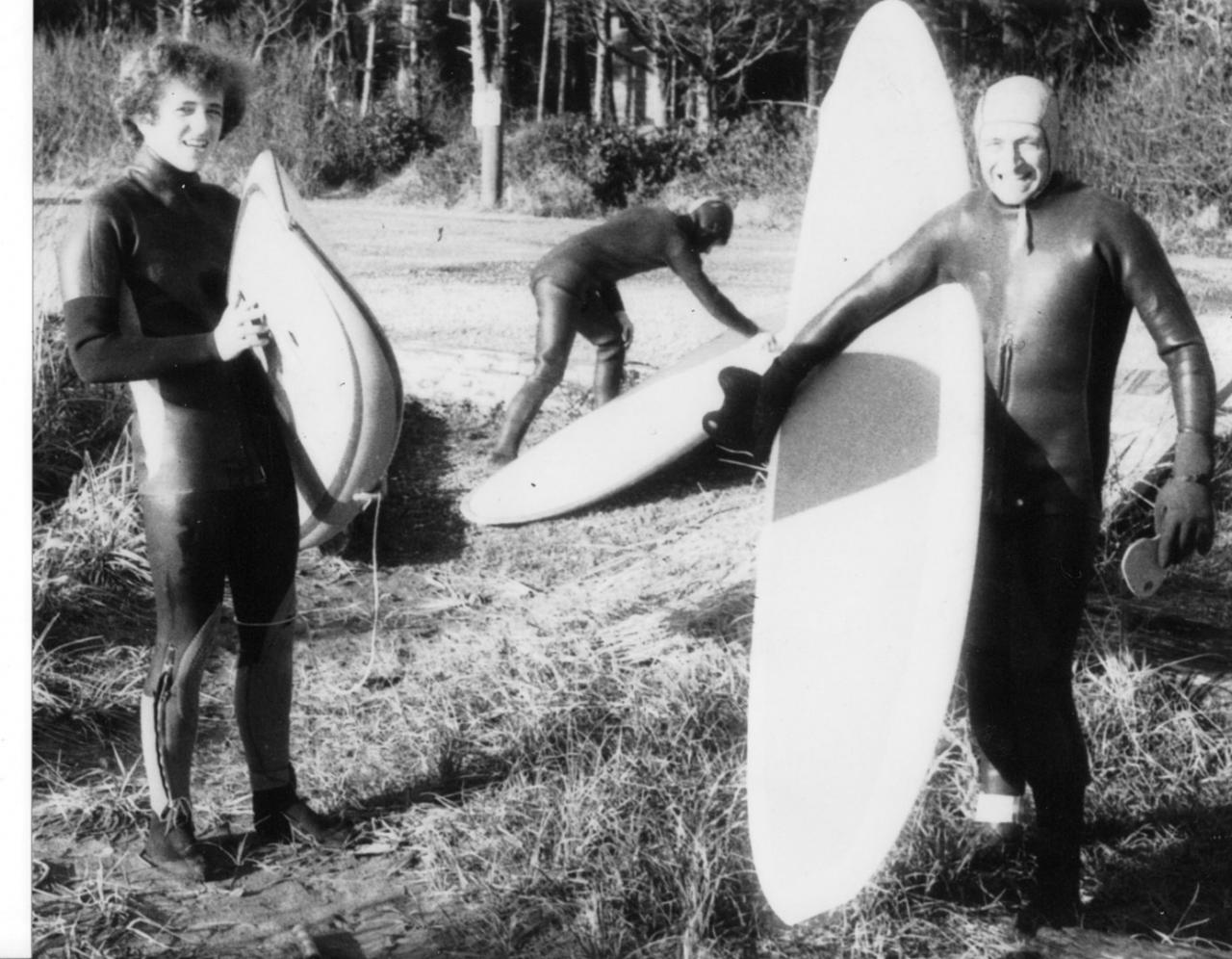


The photograph is small, monochromatic and its edges worn with time. A young Harold Sadler leans into frame with his siblings, Ken and Cindy. Behind them the Tofino coastline stretches out — wild, empty, unclaimed. “We don’t have a lot of photos because in those days nobody was taking pictures of surfers. It was just family stuff.” For Harold, those few images are more than keepsakes. They are fragments of a story only now being fully told. At the center of that story stands his father, Jim Sadler, known to most as “Preach”.
Small in stature at five-foot-eight and 150 pounds, Preach was wiry, but powerful and relentlessly resourceful. He built his first surfboard before he had ever seen one ridden in person. He would strap homemade wooden paddles to his hands to knee paddle, working around a back that had no arch and was too stiff for traditional strokes. And, he charged reef breaks and beach breaks that many had never surfed before, guided only by determination and curiosity.
“He was really crazy strong,” his son Harold recalls. “He rode a huge board when everyone else was trying to go shorter. He’d play games in the lineup like pretending he saw a set coming, sprint paddling to the outside, pulling the whole pack, then pivoting and snagging the wave while everyone else was out of position. He could do it because he had the speed and buoyancy.”
Jim earned respect by going out on days when nobody else dared, with no leash, no safety net and zero fear in the face of heavy water.
Long before surf shops arrived in Tofino or Ucluelet, Jim Sadler was testing the very idea of riding waves. In 1960, while working summer camps at Pachena Bay in British Columbia, he met a visiting Brit who pointed out a clean south swell peeling down the beach and explained it could be ridden. Jim grabbed some plywood, rounded the edges, and paddled out on his stomach.
The sessions left his skin raw, but the seed was planted. Sadler would slip off his wooden bodyboard endlessly, only later learning from a magazine article that wax was supposed to be applied to the deck. That magazine, an early issue of Surfer, had been spotted on a drugstore rack in Victoria and helped him realize you could even stand up on a board.
By 1964, he was shaping a full surfboard in his mother’s basement. He glued foam around a wooden stringer, sculpted it with hand tools, and glassed it by himself. There were no instructions, no internet tutorials and no other surfers (he knew of, yet) to guide him. By then, fellow Canadians like Bruce Atke and Wayne Bleat were already scouring the southern end of Vancouver Island for waves. But in Jim’s mind, the magazine confirmed that the sport actually existed and that he could simply teach himself.
“Hilariously, all he had to do was drive two hours down the road to Jordan River —there was already a crew of surfers there,” Harold laughs. “But he didn’t know that. He didn’t even question why there was a magazine on the rack.”
The myth that Canadian surfers were taught by American draft dodgers still lingers to this day. When prompted, Harold shakes his head. “It wasn’t like that. These were Canadians figuring it out on their own. Bruce told me, ‘As far as I know, it was legal for Canadians to fly to Hawaii.’ That’s where the inspiration came from.” Bruce, Wayne, and others brought equipment from the States: professionally shaped boards, wax, fins. Even claiming it was used to avoid duties. It was common and highlights how niche surfing was in Canada at the time.
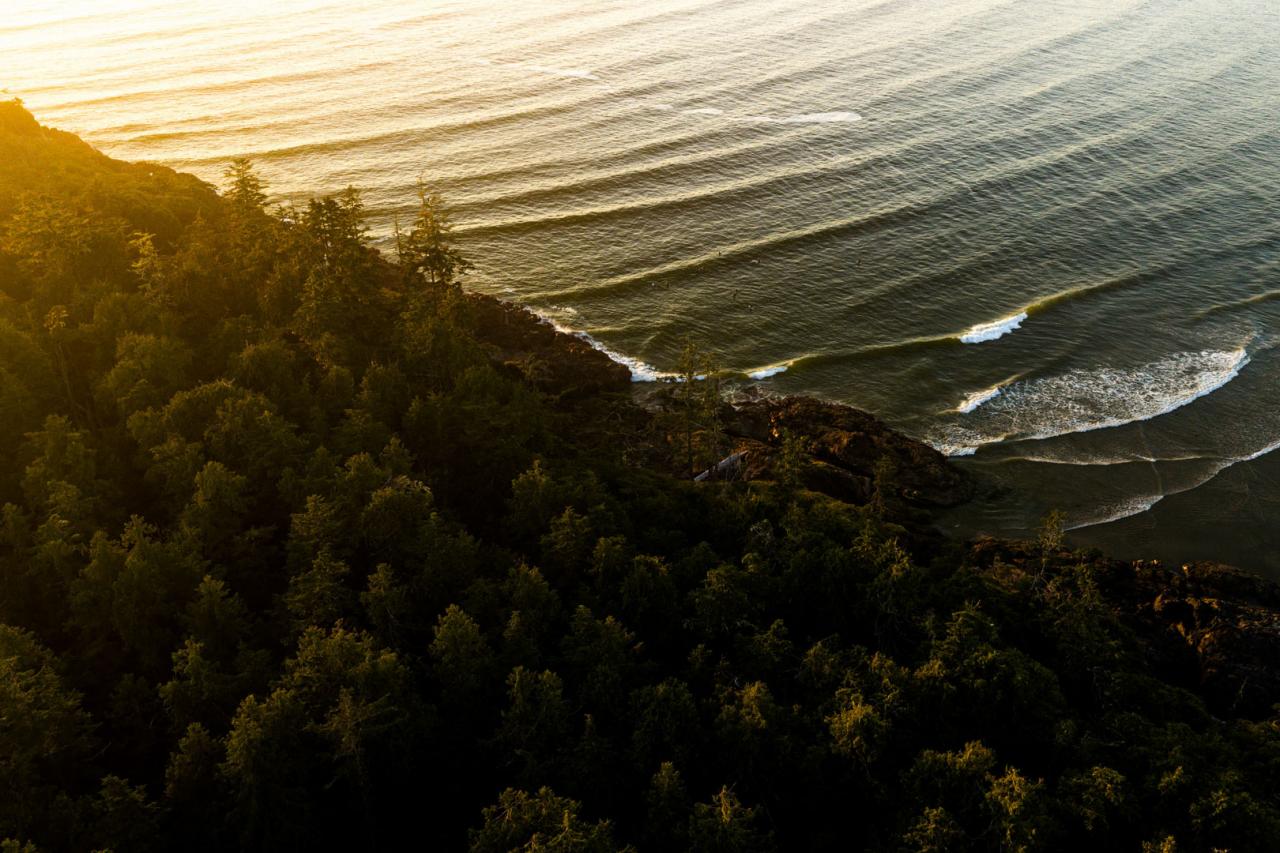
If Sadler brought resourcefulness, others added secrecy. Secret spots became whispered names, guarded like heirlooms. If you didn’t have a boat, access meant navigating decommissioned logging roads and sometimes driving on planks lashed over washed out bridges. Harold remembers his brother pressing their dad for details about a (now-infamous) right-hand point break that only lit up a few times a year.
“This must be somewhere up the coast, right?” Ken asked. Jim shook his head. “Oh no, you can drive to it.” Harold laughs, “Ken leaned across the table and grabbed him by the shirt —‘And you didn’t tell me?!’”
Harold recalls the first time they went looking for an elusive reef break near Tofino, “We asked Bruce Atke, and you could see the pain in his face like we’d asked him to sell us his first board. I’m sure he was surfing there at that time with a couple of others, just keeping it absolutely quiet. It was pretty easy to keep a secret back then. He finally gave us vague directions, and the next year we found it ourselves. There was a decrepit cabin down there at the time so we knew we were on the right track. When we came out onto the rocks and saw that power, it was completely different from anything in town. Life-changing.”
With no surf forecasting, they just eyeballed everything. “You went to Chesterman, Long Beach, looking for indicators. You had to check at dawn, observe the beach break, and correlate conditions.”
Harold went back and told fellow surfer and ex-pat Jack Bauer they had found the way in. “You didn’t go alone because you needed a friend. If you slipped and broke an ankle, it was serious. I’ve gone down solo before, had a funny fall, tore a calf muscle, and had two boards with me down there. In those days, if you didn’t have someone to go with, you thought twice. It could go south really fast.”
Harold still recalls a day there in 1982, fresh off shoulder surgery, when Jack convinced him to go check it out. Offshore winds, perfect lines, no one else in sight. “Probably one of the top ten surfs of my life,” he says. “After that, every wave around here felt like dragging an anchor.”
By the 1980s, Harold and his siblings were fixtures on Pacific Rim beaches. They surfed whenever they could with no thought of sponsorships or contests. Just staying warm. “Wetsuits back then were awful. My dad started with dive suits which were thick, stiff, and horrible. Later, you could get a Farmer John with a ridiculous beaver tail and metal turnbuckles. You had to layer with wool socks and sometimes long johns, just to extend your time in the water beyond forty-five minutes. You came out hypothermic sometimes.”
Besides wetsuit technology, another shift was coming. By the 90’s surfers like Raph Bruhwiler grew up idolizing men like Jim Sadler and Bruce Atke, “They’d go up the coast on a wing and a prayer," recalls Harold. "They’d be ready to be stuck for two weeks if the weather turned. That was the mentality. It could be three days; it could be a week. Your only forecast was a five-day advance from Environment Canada. Those guys would go, build cabins, and be self-reliant. Fend for yourself, fix engines if they break, and figure it out.”
Inspired by those around him, Raph started filming and shooting photos with his childhood friend Jeremy Koreski. He studied technique, made surf edits, explored the coast, and eventually became Canada’s first professional surfer. “Raph would be the first to say he cut his teeth on waves that Bruce found, but then they took it further.”
What stands out in Harold’s retelling is not nostalgia, but true humility. “Surfing was just something we did. If people asked, they’d say ‘Even in the winter?’ If you didn’t surf in the winter, you didn’t surf. That’s just how it was.”
By the mid-’90s, that quiet normalcy was already fading. Harold remembers showing his license at a checkout in the city. The clerk noticed his Tofino address and grinned, “You must surf”, she said. In that moment, Harold realized the tide had shifted. Surfing, once hidden, was becoming Tofino’s identity. Even into the 2000s, surfers like Noah Cohen remembered echoes of that feeling.
“When I started in 2004, nobody knew I was a surfer. If I said it, I had to explain what it meant and answer a lot of questions like where, how, isn’t it freezing? It felt like a secret society.” That secrecy, combined with the determination of figures like Jim & Bruce, formed the bedrock of Canadian surfing. Without it, there would be no professional scene, no surf schools, no wax-stained rental boards stacked at Cox Bay. “Surfing was unique up here. You knew every surfer from here to South Island. We were all on a first name basis.”
The first Canadian surfers weren’t chasing sponsors, followers, or careers. They were improvisers —shaping boards in basements, hauling planks to drive across rivers, knee paddling with homemade paddles until their bodies gave out. They did it because the ocean was there, because curiosity demanded it, because the challenge mattered.
“I guess the takeaway is that we lived in the moment,” Harold now says. “Driving to the beach with boards in the van, powering through terrible wetsuits with wool layers underneath, figuring out how to surf in freezing cold water —that’s the stuff that sticks. It’s what people from abroad find fascinating: the grit, the physical challenges, not the epic waves.”
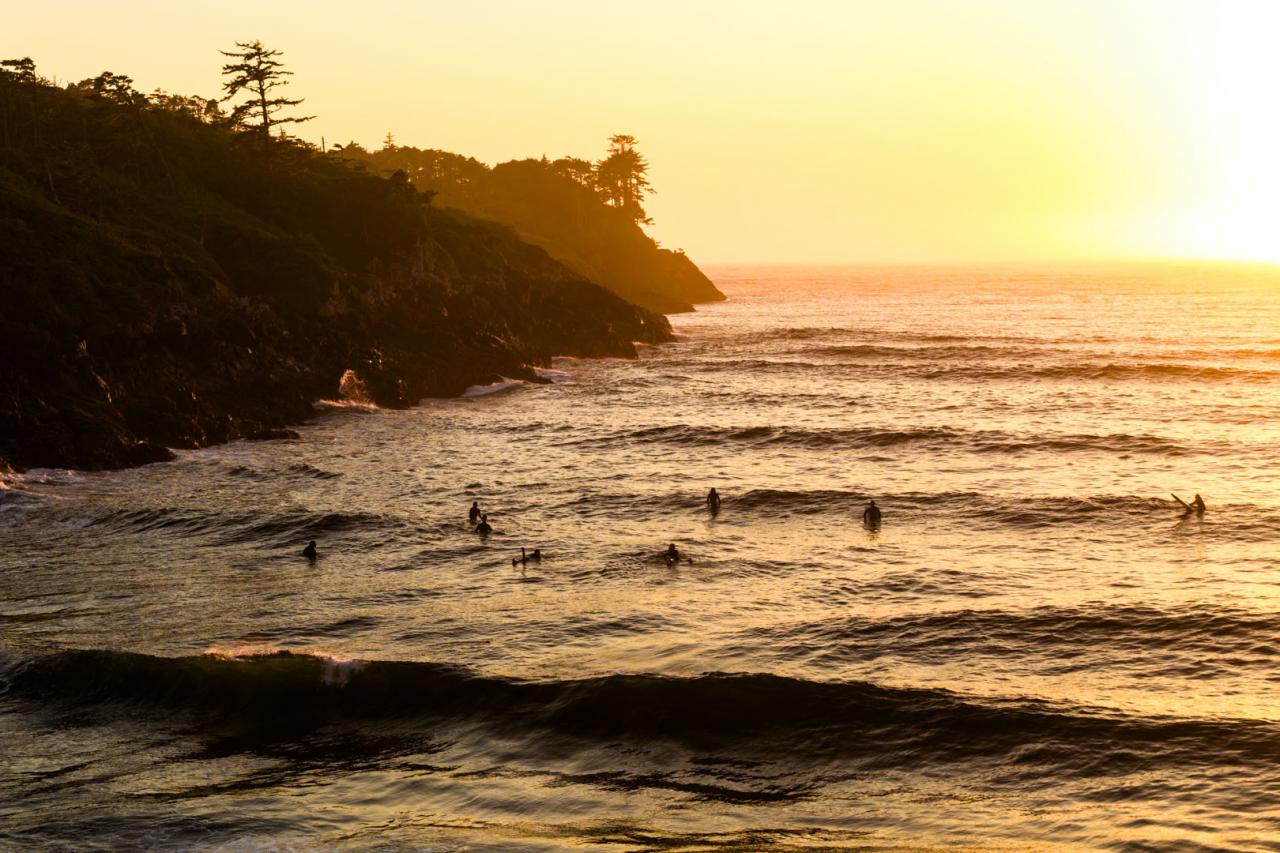
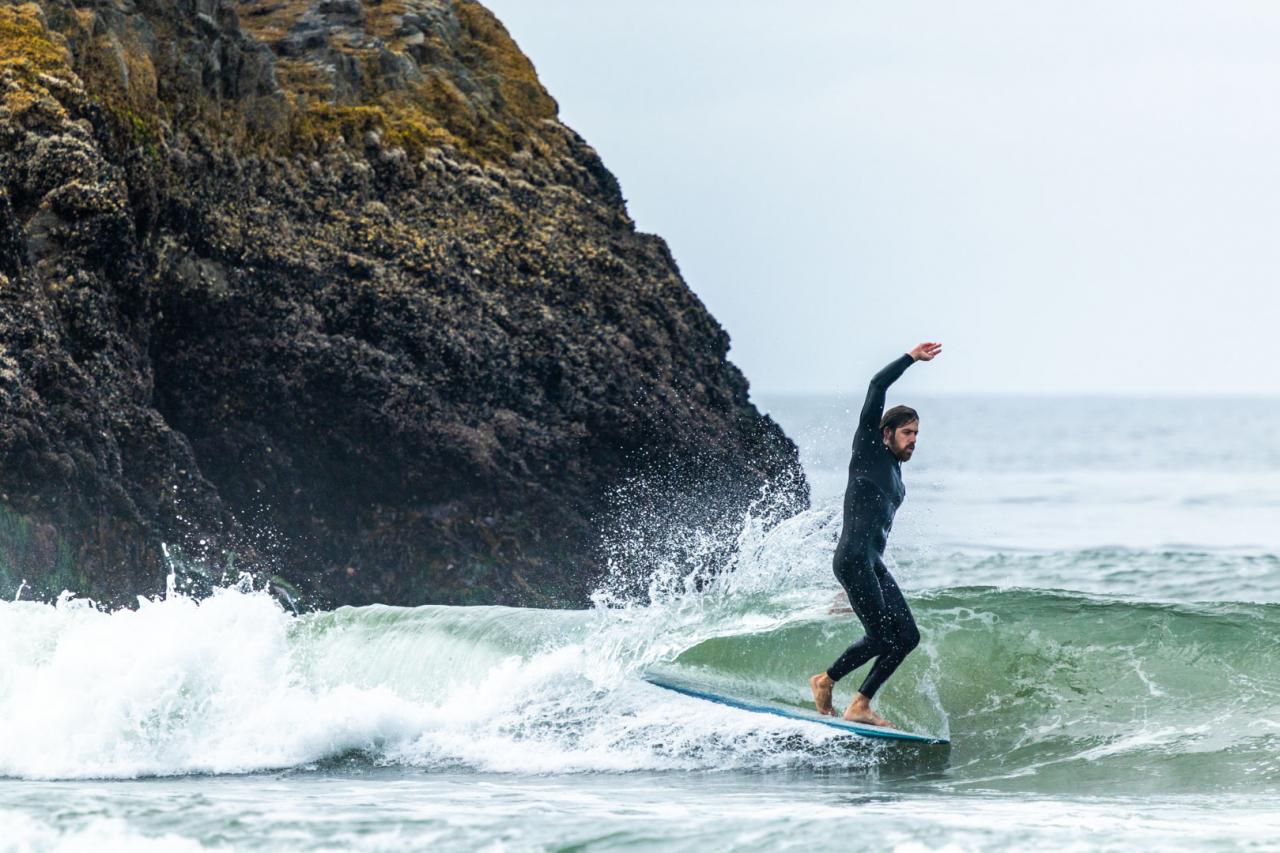
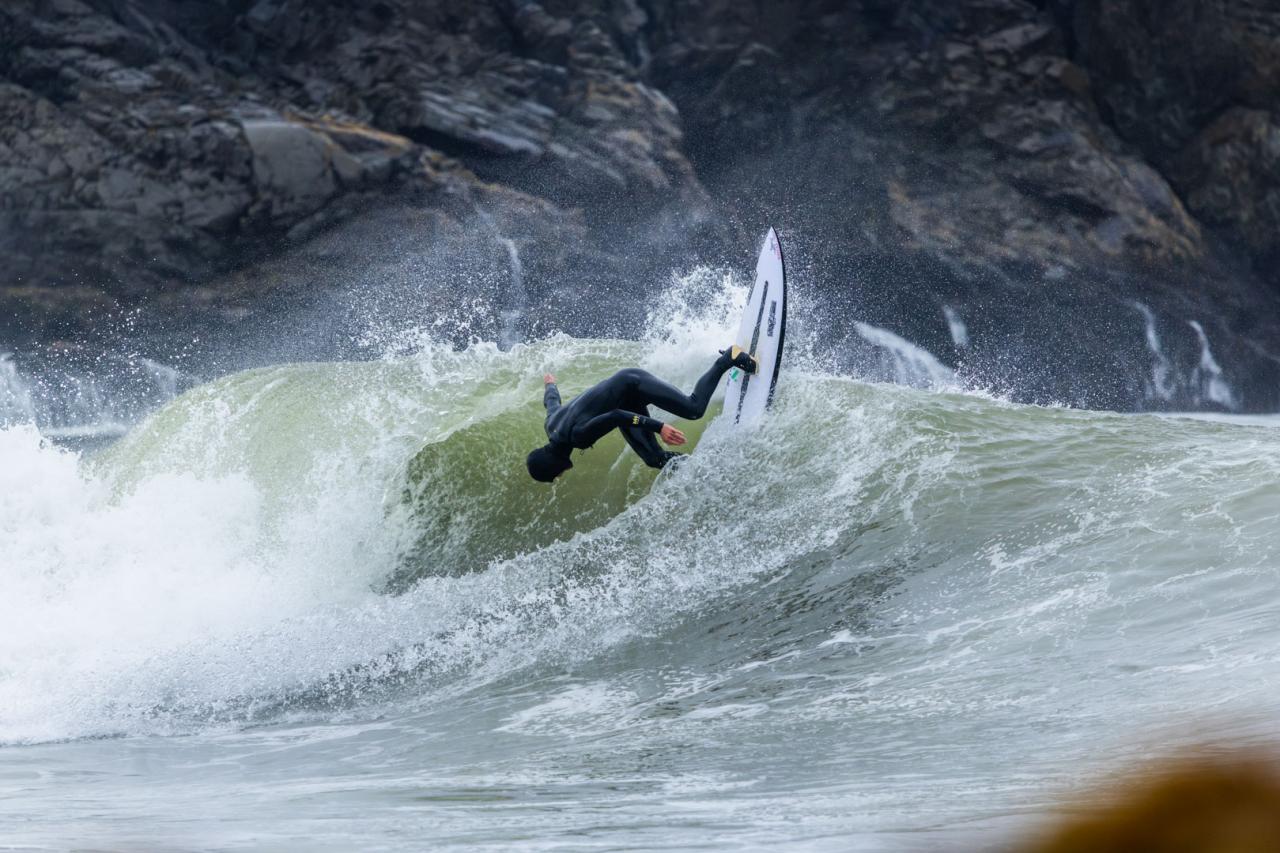
Today, Tofino is recognized worldwide as a surf town. Yet its story begins with ordinary people who looked at wild, freezing beaches and decided they would ride the waves, no matter the limitations of the gear, no matter what the risk. Their children —and their children’s children —have taken that seed further than ever imagined; however, the foundation remains.
“As I get older, things hurt more,” Harold says, looking again at the old photographs. “But I always tell people, enjoy the now. Don’t dwell on the ‘good old days’ — they were great, but focusing on them doesn’t help. Surfing alone, seeing no one else out, running up to a car with California plates just to introduce yourself because they were the only surfers you’d seen in five years —it was fun. It was cool. And now, with better equipment, longer sessions, and increased wave access available, the present is the best. It’s always going to be good if you find the waves and make the effort.”