

Kusi
There is something unshakeable about the way Africa welcomes you home. The moment I stepped off the plane in Zanzibar, it hit me. Thick, warm, familiar air, heavy with humidity and the scent of sea salt, distant woodsmoke and something earthy I can never quite name but always remember. It wraps around you like a big hug, deeply physical and all-enveloping.
The sky feels broader here, the sun appears omnipresent, and the colors deeper, more saturated. Hearing the Swahili language flowing like music through conversations on the street again, I instantly feel comforted by its familiar beat. It is an unhurried language that carries both warmth and welcome. Listening to it being spoken feels like slipping into something comfortable and rooted. I have heard people say that Africa never leaves your blood, and now I understand why.
Returning home is not about the place; it is about a rhythm, feeling, and sense of belonging which lives under your skin. Even after time away, it is this feeling, not just the geography, which welcomes one back.
After a year of chasing wind across Southeast Asia, Central America and the Caribbean, my wife Francesca and I had ticked off some of the world’s most iconic kitesurfing playgrounds. Each spot offered its own cadence, its own character, and its own story. But as the stamps in our passports multiplied, it became clear to us that we were both still quietly yearning for Africa, not just for the raw coastlines or wind-worn places, but for the energy of the land and a quiet grounding that comes with feeling at home in a region so well known.
Just across the Zanzibar Channel from mainland Tanzania, a cluster of islands float in the Indian Ocean. The largest, Unguja, known to most simply as Zanzibar, lies only twenty-two miles offshore. It is here that Zanzibar City rises. Its heart is in the historic Stone Town, a place once bustling with merchants, sailors and spice traders, its harbor a crossroads of commerce and culture.
Technically, Zanzibar refers to the entire archipelago, but it is Unguja that pulls travelers in the most with its unique history, culture, and raw island energy. Unguja’s location in the Indian Ocean places it at the heart of ancient trade routes, where Swahili, Arab, and Persian influences merged over centuries. The island became a vital hub for spice trade, various goods — and tragically — the slave trade too.
Life here once moved to the rhythm of the monsoon winds, which dictated the coming and going of trading vessels. There is a striking irony in the fact that the same seasonal winds that once dictated trade and tragedy now fuel adventure and freedom on the water, attracting traveling kitesurfers like us to these very shores.
The winds of the past continue to shape the present, but in ways no one could have imagined.
We timed our arrival for the end of May, just as the monsoon rains were drawing to a close and the second wind period was beginning to stir. The island greeted us in deep greens, palms heavy with fresh fronds bursting with coconuts, fields thick and fragrant, the scent of wet earth and spice hanging in the warm air. Along the main roads, puddles mirrored the open sky, while in the villages the smaller, rougher tracks were slick with mud, making them trickier to navigate. It felt as though the island had been washed clean and was now being rejuvenated and readied for its next chapter.
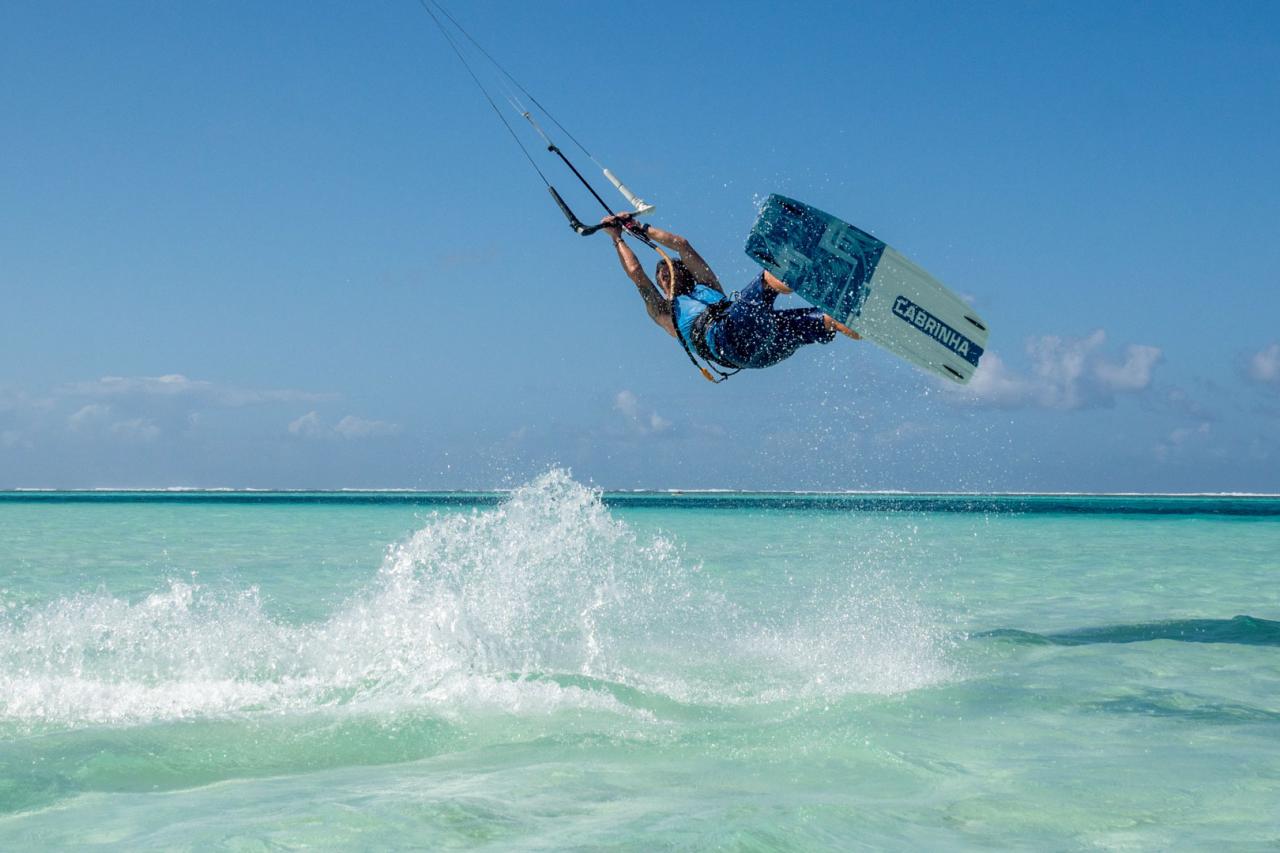
At this time of year, as with much of East Africa, Zanzibar is under the spell of the ‘Kusi’ trade wind. In Swahili, the word means south, yet here it has long been tied to the wind cycle itself, a reliable southerly wind that arrives in June and prevails until mid-October. It is my favorite season to kitesurf in the region, when cooler, denser air fuels stronger, more consistent winds and sends larger, more powerful swells crashing over the fringing reef.
The very mention of Zanzibar conjures images of turquoise waters and white sandy beaches, fragrant spice markets, and a vibrant tapestry of history and multicultural life. Long celebrated as the jewel of East Africa, Zanzibar has, over the years, claimed its place alongside Mauritius and Madagascar as one of the Indian Ocean’s premier watersports playgrounds.
A kitesurfing paradise — that is how my mind had pictured it. But stepping onto the island, it was as if that image had been pulled straight from my imagination and brought to life. The water shimmered in fifty shades of blue, from glassy turquoise shallows to deep indigo channels running deeper out to sea. Vast white sand beaches stretched endlessly in both directions, framed by coconut palms swaying lazily in the breeze.
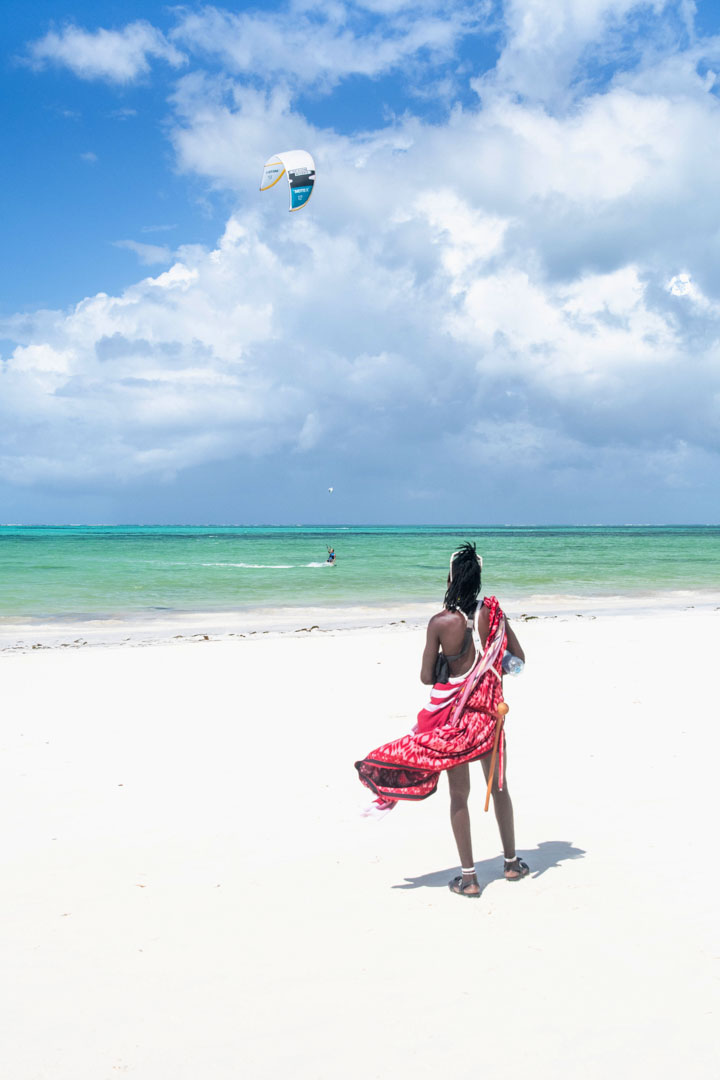
Out on the Indian Ocean, the horizon was alive with Arabic dhows, their white sails fluttering in the wind, a quiet reminder of the island’s timeless connection to the sea. The Maasai, an iconic tribe celebrated for their enduring traditions, strode along the shoreline, shukas of crimson and cobalt blazing, their warrior-like presence striking against the tropical backdrop.
The lagoons seemed to go on forever, wide, flat, and impossibly inviting. Just beyond them, the fringing reef stretched in an endless turquoise line across the horizon, where the ocean flexed its muscle, its raw power unraveling in white water over the reef. With every rise and fall of the incoming swell, the tides performed, reshaping the shoreline and revealing a new face of the ocean each time.
Unguja did not just look like a kitesurfer’s dream, it felt like one too.
Sheltered by coral reefs and powered by steady winds, Zanzibar’s east coast opens onto the Indian Ocean and hums with watersports activity. The west side, facing mainland Africa is calmer, while the north and eastern shores hold some of the island’s best beaches for kitesurfing and wing foiling. Stretching over fifty-five miles from north to south, the two seasonal winds sweeping in from opposite directions shape the water to suit every style of riding, turning the island into a haven no matter what kind of session you are chasing.
With so much to explore, my wife and I focused on the east coast, the island’s watersports mecca, an ideal base to soak in its beaches and village life. From Paje to Jambiani and Bwejuu, each just ten minutes apart, and Pingwe a little farther north, every village offered its own coastal charm.
The fringing reef stretching down Zanzibar’s eastern seaboard sits about one mile offshore and shelters an extensive, sand-bottomed lagoon that forms between the beach and the coral edge. Continuous and unbroken, it links the lagoons of Paje, Jambiani, and Bwejuu into one connected body of water. Different villages offer different access points, but the lagoon itself feels like one uninterrupted realm, perfect for downwinders or chasing waves along the barrier reef.
Pingwe Beach is a bit different, it sits on the Michamvi peninsula that curves inward, so the lagoon here has a slightly distinctive character, but it is still part of the same reef-lagoon system. The villages hug the coastline within a few miles of one another, and with that the winds seem to dance in unison along the east coast. Come July and August, the trades hit their stride, blowing steady from 18 to 25 knots. With our quiver of 8m, 9m, and 12m kites at the ready, we never missed a single ride.
The tides here are dramatic and shape everything about time on the water. At low tide, wide sand flats and shallow pools appear, while at high tide the ocean can push right up to the palms. Getting the timing right quickly became part of our rhythm on the island. Twin-tip riders find their perfect playground about two hours before low tide, when the lagoons lie calm and flat. Foil and wing riders, meanwhile, plan their time on the water two hours before high tide, when both the lagoon and reef offer the ideal depth for gliding and carving.
Paje, the heart of Unguja’s watersports scene, unfolds over four miles along the island’s largest lagoon and the busiest east coast beach. Over thirty kite schools keep the turquoise waters alive while the village — once a sleepy fishing hamlet — now pulses with eclectic bars, cafes, and open-air beach parties.
Flanking Paje are its quieter neighbors, Bwejuu and Jambiani. Less developed and far less crowded on the water, these villages still retain the authentic rhythm of Swahili coastal life. In Bwejuu, it was a striking sight to watch women at work in the seaweed farms, practicing a tradition that has shaped the village for generations.
Walking out across the shores of Jambiani, we were dazzled by white sand stretching seemingly forever. Here, the lagoon curls around the southern tip of the island, forming endless sandbanks and tidal flats perfect for freeriding.
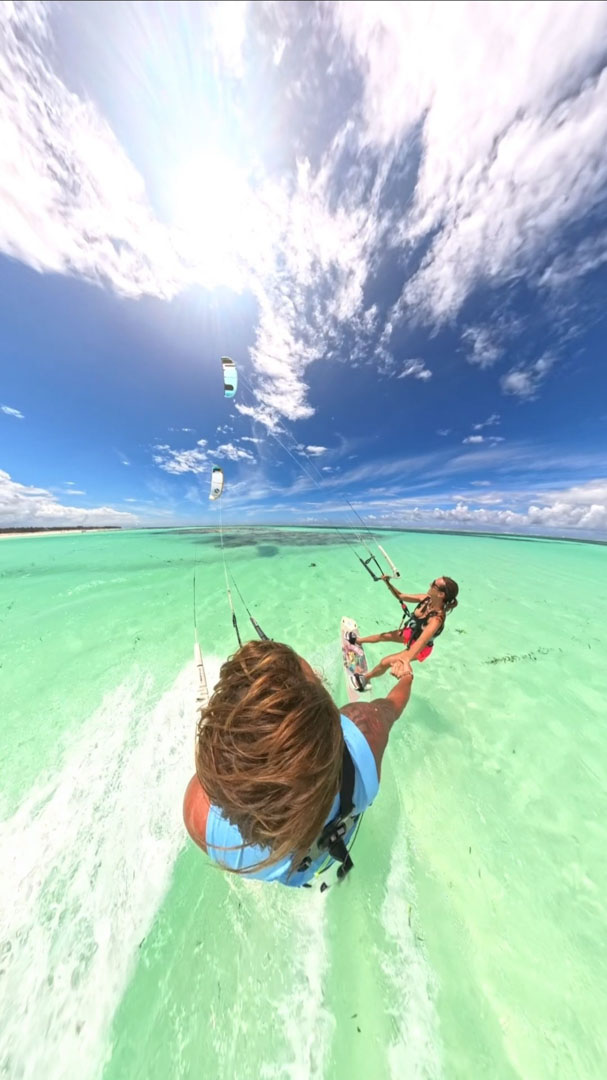
Heading to Pingwe Beach in Michamvi, we discovered a series of smaller, interconnecting lagoons that weave together like veins of water, flowing gently into a slender sandbar that arrives at the beach. Far from all the crowds, this hidden gem quickly became one of our favorite places to ride. Riding back from the reef across the lagoon, the water shifted through a spectrum of intense, iridescent blues, more vivid than anywhere else we had ridden before.
I often timed my kitesurfing sessions to coincide with the local kids’ swimming club. While they strolled along the sandbar as the tide fell, I would leap over them, trade high-fives, and even give the littlest a ride on my back. By the end of the day, I was not sure who was having more fun, me or them.
When we stepped off the water, the Boho Social Lounge at Upendo Beach hotel became our retreat, where cocktails came with sweeping views of the Indian Ocean, providing an inspiring backdrop for reflecting on our day as the first threads of this story took shape.
Heading inland, the landscape reveals another side of Unguja’s beauty. Skirting Jozani Forest, we caught glimpses of rare red Colobus monkeys before passing spice farms that gave the island its nickname, the ‘Spice Island’. It is here that one gets to witness the simplicity and natural flow of rural Zanzibari living. The pace slows. A tempo the locals call ‘pole-pole’ in Swahili, meaning slowly or taking one’s time, embodies the essence of island time and the simplicity of rural Zanzibar.
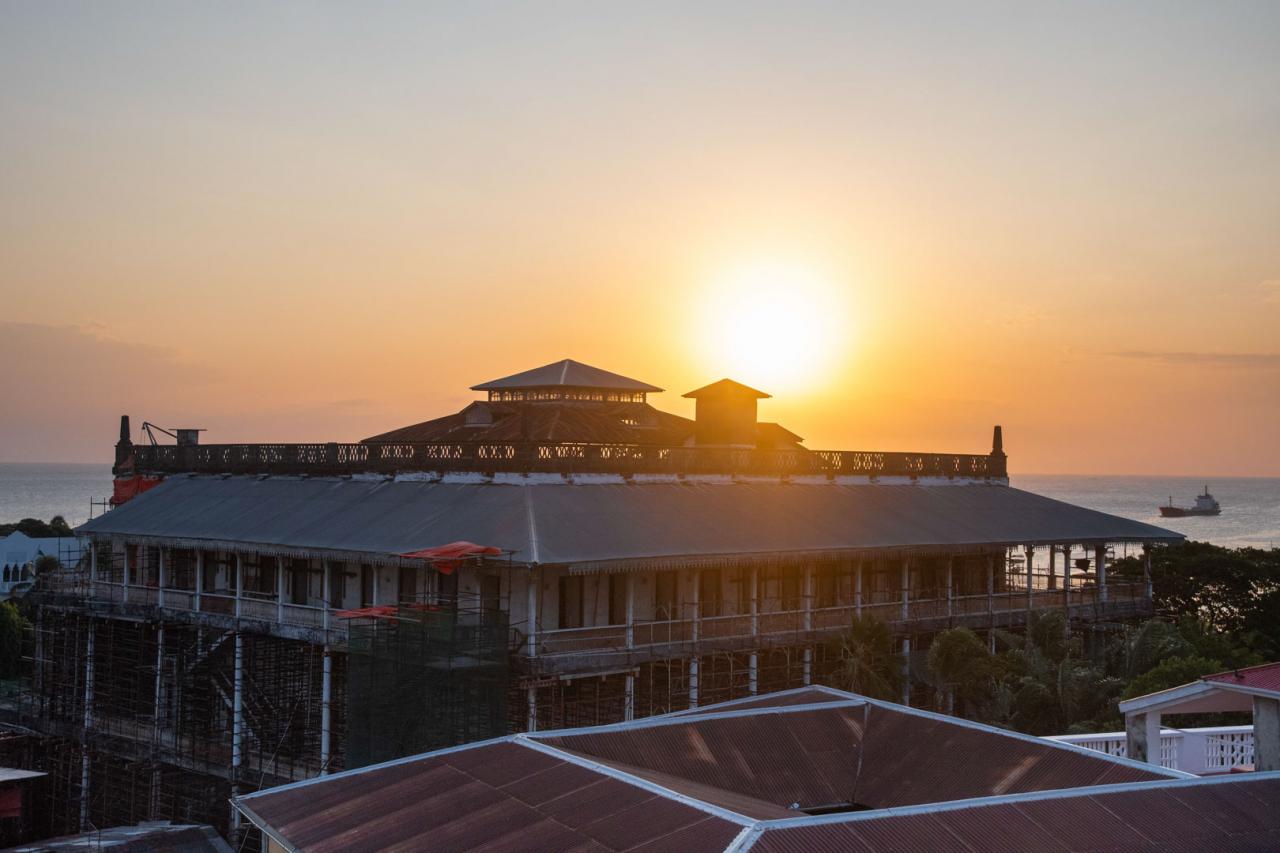
Beyond the beaches, we wandered Stone Town’s winding alleys, losing ourselves in a maze of history. Minarets rose above carved doorways and 19th-century landmarks peeked from every corner, each step revealing the island’s layered heritage that earned it UNESCO World Heritage status, making it feel as if we had stepped back in time.
From gentle lagoons for learners to rolling reef breaks for wave chasers, Unguja’s east coast offers a watersports heaven against a captivating tropical backdrop. Yet even after months here, much remains to explore, including all the north coast spots, hidden sandbars, offshore atolls, and untamed reef breaks across its archipelago of smaller islands.
With its relaxed pace, vibrant water life, and rich culture, Unguja delivers everything a tropical escape should. For now, we are happy to stay, to explore, and to let the island and all its hidden corners reveal their magic.